Showing posts with label Big Power. Show all posts

Saturday, September 21, 2013

Big Coal WATB Already Bitching About Future Regs

Seriously, morons: if you're still planning to build new coal plants you are too disconnected from reality to be making any decision more consequential than what to have for breakfast.

John Cheves at the Herald:

Nobody is likely to build more coal-burning power plants in the United States under strict emission limits proposed Friday by the U.S. Environmental Protection Agency, Kentucky coal and utility officials predicted.

That could further weaken demand for the coal of Eastern Kentucky, which has seen mines close and thousands of mining jobs disappear over the last few years. Coal counties in the mountains suffered official unemployment rates this summer between 11 and 18 percent.
Coal country unemployment is caused by falling demand, the difficulty and expense of reaching remaining seams, and the lack of non-mine employment in towns wholly owned and operated by Big Coal.

President Obama's long-overdue proposed rules have nothing to do with unemployment and everything to do with reducing the frequency of climate-change catastrophes like last week's drowning of central Colorado.
The Obama administration (pressed) ahead Friday with tough requirements for new coal-fired power plants, moving to impose for the first time strict limits on the pollution blamed for global warming.

The proposal would help reshape where Americans get electricity, away from a coal-dependent past into a future fired by cleaner sources of energy. It's also a key step in President Barack Obama's global warming plans, because it would help end what he called "the limitless dumping of carbon pollution" from power plants.

Although the proposed rule won't immediatedly affect plants already operating, it eventually would force the government to limit emissions from the existing power plant fleet, which accounts for a third of all U.S. greenhouse gas emissions. Obama has given the Environmental Protection Agency until next summer to propose those regulations.

"For power producers and coal mining companies that reject these standards, they have no reason to complain, and every excuse to innovate," said Sen. Ed Markey, D-Mass., the author of a 2009 bill to limit global warming. The legislation, backed by the White House, passed the House, but died in the Senate.
 Coal is dead. Has been for years. But the industry and Big Power refuse to bury it, so the stinking corpse continues to poison the planet with lethal carbon and the political system with stupidity and lies.

Wednesday, August 21, 2013

Wednesday, June 26, 2013

Carbon Regulation Could Save Kentucky, If Only We Let It

Kentucky won't cut itself free from the rotting corpse of the coal industry until we're forced to.

Bill Estep at the Herald

Kentucky's coal-fired power plants produce a lot of carbon dioxide, so President Barack Obama's call Tuesday to limit such emissions from existing plants sparked sharp reaction.

Supporters saw a historic effort to step away from the brink of devastating climate changes. Opponents predicted economic ruin. Utilities said the plan could drive up electricity rates.
SNIP
U.S. Sens. Mitch McConnell and Rand Paul, and U.S. Reps. Andy Barr, Hal Rogers and Ed Whitfield, all Kentucky Republicans, condemned Obama's plan, saying higher electricity rates would kill U.S. jobs.
"He may as well call his plan what it is: a plan to ship jobs overseas," McConnell said in a speech hours before Obama released the plan.

Whitfield, chairman of the House Subcommittee on Energy and Power, said the panel would hold hearings on Obama's plan and its anticipated economic effects.
Alabama native and Louisville city boy McConnell doesn't give a flying fuck about coal miners and their families, and Whitfield "represents" Western Kentucky from his long-time home in Florida.
Kentucky gets more than 90 percent of its electricity from coal-burning power plants, so the state is one of the largest carbon producers in the country — one of 18 where emissions went up from 2000 to 2010, according to federal statistics.
SNIP
 Eastern Kentucky already has seen a dramatic drop in coal production and jobs as low natural gas prices led utilities to switch for cost savings.

Justin Maxson, president of the Mountain Association for Community Economic Development, said that as the administration moves to cut carbon emissions, it should invest in Eastern Kentucky communities long dependant on coal.

Officials at every level need to build a more diverse economy by supporting entrepreneurs and promoting sustainable forestry and wood products, energy efficiency, and local foods and tourism, Maxson said.

In his speech, Obama anticipated the charge that his plan would kill jobs.

U.S. businesses have responded many times before with innovation to reduce pollution without economic ruin, Obama said. "Don't bet against American workers. Don't tell folks that we have to choose between the health of our children or the health of our economy," he said.

Environmentalists and others applauded Obama's initiative.

"This should have been done a long time ago," said Suzanne Tallichet, chair of Kentuckians for the Commonwealth.

Reducing carbon pollution will benefit human health and the environment, she said.
But only shutting down fossil fuels for good will free Kentucky and the rest of the nation from carbon serfdom.


Read more here: http://www.kentucky.com/2013/06/25/2692568/obamas-plan-to-fight-climate-change.html#storylink=cpy
:


Thursday, February 21, 2013

The Hottest Cool Thing in Kentucky

I've heard that Bluegrass Energy, a rural electric cooperative in Central Kentucky, is considering following Berea's example by starting a solar farm.  While this is not as remunerative for customers as the feed-in-tariff provision of the Clean Energy Opportunity Act, it is a huge step forward from Kentucky's deplorable enslavement to Big Coal.

Every electricity producer in the state should start a solar farm immediately.  If tiny Berea can do it, everybody can do it.

From Berea Utilities:

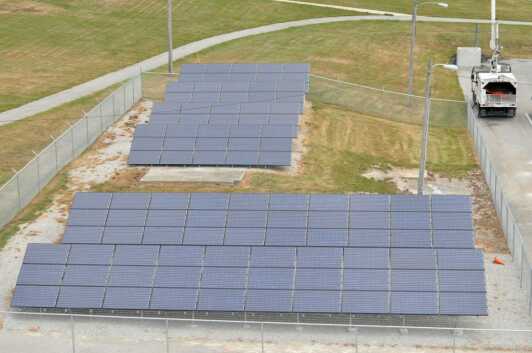
Berea Municipal Utilities recently announced that an additional 132 solar panels are now available for lease from the Berea Solar Farm!

Currently, the Berea Solar Farm consists of 120 solar panels on the grounds of the BMU building on Harrison Street.  Those panels have been leased, installed, and are now generating electricity being credited to customers’ accounts.  When complete, the announced expansion will more than double the size of the solar farm.  The 132 new panels will be located on the grounds of the BMU Waste Water Treatment Plant.

Background and hopes for the future

Berea Municipal Utilities (BMU), with support from the City and an EECBG grant, established the Berea Solar Farm – arrays of photovoltaic (PV) panels to generate electricity.  The purpose of the Solar Farm is to provide BMU customers who want to invest in local solar generation an opportunity to do so.  The program invites community members to come together in moving Berea toward a better energy future.

Leasing for the first 60 panels began October 25, 2011.  Those 60 were leased out in 4 ½ days, and the decision was made to offer a second 60 panel array as part of the same construction project.  All of the panels were leased in less than four months.  A very promising beginning!

One way that sustained growth in the Berea Solar Farm may occur is for participants – whether residents, small businesses, churches, or schools – to plan for a gradual increase in their panel holdings in order to reach some goal they have set for the extent to which their total electricity use is offset by their solar panels’ generation.  This announced expansion of the Berea Solar Farm is the first opportunity to move toward achieving such goals.

 How does the leasing work?

Customers (and others) are invited to lease solar panels (no limit on number) for a one-time lease fee of $750 per panel.  This one-time fee covers a 25-year period.  In return, customers will receive credit every billing period for the electricity generated by their panels.  In this way participating customers gain access to solar generation at an excellent price (about $3.15 per installed watt).  The panels are owned and maintained by BMU and located on city property with excellent orientation to the sun and no shading.

Although anyone may lease panels, only metered residential customers (class 1 or 9) and commercial customers (class 2 or 3) may receive Panel Production Credit (i.e., credit on their electric bills for the electricity produced by these Solar Farm panels).   For each panel leased, a location within the BMU service territory must be specified.

 Who may want to lease solar panels?

Anyone, including people who don’t live in Berea!  But the Berea Solar Farm would seem to be ideal for customers (and others) who want local opportunities to invest in clean energy and
  • have homes, apartments or businesses – owned or rented – not well suited for solar installations due to issues with shade or directional orientation
  • can’t afford the relatively large cost of installing an entire system on their property
  • do not want to undertake the responsibilities of ownership
  • are attracted to the idea of leasing panels but donating the billing credit to an organization such as a church or school in the BMU service area
  • are attracted to being part of a community effort that will increase our energy resiliency and decrease the flow of Berea dollars out of the community
  • are attracted to helping Berea demonstrate the viability of one model for how local communities in Kentucky and elsewhere to respond to the need for leadership in the face of pressing global, national and statewide energy problems.

Saturday, February 16, 2013

How Runaway Slaves Could Save a Kentucky Community from Toxic Coal Ash

I'm late getting to this, but it's too potentially wonderful to overlook.

Joe Sonka at Leo's Fat Lip:

LG&E has faced over a year of difficulty getting their permits in order to destroy pristine land — featuring a legally protected cave — in Trimble County with a toxic coal ash landfill adjacent to their power plant.

While LG&E’s past obstacles have been the discovery of the cave and an underground stream, their new one is of rich historical value, as the cave might well have been used in the underground railroad to rescue slaves fleeing the South.
“In the opinion of this investigator, the ‘Wentworth Lime Cave’ serves as a very real example of a ‘holding’ or way station to aid slave escapes along the Ohio River,” concluded Alicestyne Turley, a historian and contractor hired by LG&E consultants to review markings found inside the cave.
The U.S. Army Corps is reviewing the study and other information as part of a wetlands destruction permit required for the landfill.
“We will just have to look at the options to see what can be done,” said Todd Hornback, a corps spokesman.
LG&E denies the evidence — shocking — but others hope the energy behemoth chooses not to bury history with tons of mercury and arsenic.
Lauren McGrath, a Sierra Club representative who is following the issue, urged the company to preserve the cave.
“Sure, LG&E can legally choose to destroy the cave, but LG&E’s leadership can also choose to act with dignity and deference to an extremely powerful historical and cultural site by preserving that area,” she said. “Doing anything less would be morally appalling.”
Well, I suppose that settles the matter for good, because we know that LG&E would never dare display morally appalling behavior.
The Sierra Club, along with Kentuckians for the Commonwealth, was part of a coalition that forced 880-pound gorilla East Kentucky Power Cooperative to abandon plans for a new coal-burning electricity plant three years ago. LG&E's a tougher opponent, though, and the Corps really hates tree-huggers.

Saturday, January 26, 2013

Make the Electric Company Pay You

Dreading the arrival of your next electric bill? The one that will cover this last week of single-digit temperatures?  What if instead you were looking forward to a check from your power company? It can happen, with the feed-in tariff in the Clean Energy Opportunity Act proposed for the Kentucky General Assembly.

From Kentuckians for the Commonwealth:

The Clean Energy Opportunity Act would create a Renewable and Efficiency Portfolio Standard requiring utilities in Kentucky to get an increasing share of their electricity from clean, renewable sources and energy efficiency programs.

It will also establish a Feed-in Tariffs that set a guaranteed rate for renewable energy producers.
But you don't have to be a corporation to be a renewable energy producer.  All you have to have is a couple of solar panels on your roof.
The Tennessee Valley Authority has paid a Kentucky school district a little more than $37,000 for producing electricity.
Richardsville Elementary School in Bowling Green earns money from the energy it produces.School district spokeswoman Joanie Hendricks said the payment from TVA goes into a separate account, which will be used to replace solar panels at Richardsville when they wear out.
A feed-in tariff is not the energy credit system in which the power company just credits your account for the energy your roof solar panels produce, but you never get paid for the extra energy beyond the amount you use.

A feed-in tariff requires the power company to pay you in actual money, not energy credits.

After an initial investment for solar panels - the price of which is dropping every day - it's pure profit.

Gainesville Florida pioneered the technique years ago, but it's been a slow slog getting other states to pass legislation requiring power companies to pay.

Call or email your legislators and ask them to sponsor the Clean Energy Opportunity Act.

Saturday, December 29, 2012

Eat or Heat? Kentucky Gives Profitable Utilities Another Rate Increase

Private utility companies really are the absolute worst. They get monopolies so they don't have to compete on either price or service; they buy weak regulation from state legislators so the Public Service Commission is essentially required to give them rate increases; and their "customers" are really hostages, whose only "choice" is to pay the monthly ransom or go without water and electricity.

At least with public utility companies, you can vote with motherfuckers out.

The Kentucky Public Service Commission (PSC) today accepted a settlement granting revenue adjustments that increase the base electric rates for customers of Kentucky Utilities Co. (KU) and the base electric and natural gas rates for customers of Louisville Gas and Electric Co. (LG&E).

The revenue adjustments are at levels agreed to by the two utilities, the Kentucky Office of Attorney General and other parties to the utilities’ rate cases, among them the Kentucky Industrial Utility Customers Inc. (KIUC), Kroger Co., the Kentucky School Boards Association and advocates for low-income consumers.
Uh, no. If they signed off on this abomination, they are not "advocates for low-income consumers." They are parties to the ass-fucking of low-income consumers.
In orders issued today, the PSC said that accepting the settlement is in the public interest because they result in a rates “consistent with those justified by our traditional rate-making analysis.” The PSC found that the rates in the settlement are fair, just and reasonable. The new rates take effect on Jan. 1, 2013.
KU, by the way, is a giant money tree for its non-Kentucky parent corporation.
Under the settlement agreement, the average monthly bill for a typical KU residential customer will increase by $5.16 (5.6 percent). A typical LG&E residential electric customer will see the average monthly bill increase by $4.25 (5 percent). The average monthly bill for an LG&E residential natural gas customer will increase by $5.57, a figure that includes a new surcharge for infrastructure improvements but does not take into account any fluctuations in the price of natural gas itself.
Five percent hike? In a year when inflation has been under two percent but unemployment over eight percent? A five percent hike for people who already have literally nothing left at the end of the month after paying rent and buying food and medicine? Why not 500 percent? The result for working people is the same.

But that's nothing compared to this little time bomb:
... does not take into account any fluctuations in the price of natural gas itself.
Translation: We'll hike your rates 10 percent, or 50 percent, or 100 percent whenever a new yacht catches our eye or just because it's fun to fuck with the poors and you can't stop us.

Because nobody knows the real price of natural gas any more than anybody knows the real price behind the roller-coaster changes at your local gas station.

But it's not like they didn't warn us.
Officials of the state's utility companies told lawmakers (in June 2011) that all Kentucky customers can expect average rate increases of 20 percent during the next five years.

John Voyles Jr., a vice president of Louisville Gas & Electric and Kentucky Utilities, told a legislative committee that a host of new Environmental Protection Agency regulations will mean upgrades and changes to the state's coal-fired power plants, resulting in increased costs to customers.

Voyles said power companies are looking at an "unprecedented number of proposed regulations" in the next four years that will require changes to comply with pollution standards.
Those would be the "unprecedented number of proposed regulations" that:
  •  are the absolute bare minimum necessary to prevent thousands of premature deaths caused by air pollution from those coal-fired plants.
  • will never take effect because the utility companies will use the millions of dollars they steal from ratepayers to bribe congress to block those regulations.
One lonely voice in the Kentucky General Assembly asked the right question.
But Sen. Ray Jones, D-Pikeville, questioned why statutes allow the companies to recover both capital and operating costs from customers for changes made to comply with regulations. That means they can still make a profit and pass all of the costs on to the customers.
Don't worry that Sen. Jones will make life difficult for the utilities.  Either he'll accept the bribes the utilities offer him, or his next election opponent will.

The private water companies are if anything even more arrogant and greedy.

Beth Musgrave at the Herald:
A rate increase requested Friday by Kentucky American Water would add an average of $5.76 to residential bills each month, raising the typical payment about 17.6 percent, from $32.75 to $38.51.
This from a German-owned company that has been stealing land and money from Central Kentuckians and conning the PSC for decades. I think their motto is:

"You can live without electricity or heat, but not without water. Pay us or die."

Read more here: http://www.kentucky.com/2012/12/28/2457737/kentucky-american-water-requests.html#storylink=cpy

Read more here: http://www.kentucky.com/2011/06/03/1761624/kentucky-utility-bills-expected.html#storylink=cpy

Read more here: http://www.kentucky.com/2011/06/03/1761624/kentucky-utility-bills-expected.html#storylink=cpy

Saturday, December 1, 2012

Obama Re-Election Instantly Creates More Than a Thousand Jobs in Kentucky

Wow. Look at that.
Southern Coal Corp. is recalling several hundred laid-off miners in Kentucky, Virginia, and West Virginia and plans to hire 650 new workers.  Roanoke-based Southern Coal announced Tuesday that it has entered into a multi-year contract to supply coal to American Electric Power.  The contract will allow it to re-start mines idled earlier this year and to save 500 jobs.
It has to be the election, right? I mean, surely all those coal execs claiming that President Obama is responsible for what happens in the coal fields weren't lying, were they?

Nor the ones who claimed the EPA determined the number of coal-plant jobs, they couldn't have been lying, could they?
Hundreds of new jobs, cleaner air and competitive electric rates...that's what LG&E officials say new plant upgrades will bring to Kentuckiana.

The announcement came Thursday at a groundbreaking ceremony at the Mill Creek power plant on lower Dixie Highway.

The new jobs will begin almost immediately.

SNIP
Over the next three and a half years, the company will spent $940 million upgrading the four coal fire power plants that currently supply electricity to serve nearly a million people who reside in Metro Louisville.  

The expansion will allow the plants to all continue to use coal, while complying with new EPA regulations.

SNIP

Construction contractors expect to hire about 700 construction workers over the course of the project, who will earn from $22 to $25 an hour.
No, Big Coal and Big Power never lie, especially about jobs in their industries and how President Obama is responsible for them.

Yep, I'd say Big Coal, Big Power, the Commonwealth of Kentucky and all its workers and voters owe a great big debt of gratitude to the president who has created more jobs for them than any other: Barack Hussein Obama.

Thursday, May 31, 2012

Big Power Gives Up On Yet Another Coal Plant

When they won't commit to coal even in the coal-owned Commonwealth, it's time to kick coal to the curb and start sucking up to Big Renewables.

Scott Sloan at the Herald:

Kentucky Power on Wednesday asked to withdraw its controversial request to upgrade an aging coal-burning power plant.

The last-minute reversal came just days before the Monday deadline by which the state Public Service Commission would have ruled whether the electric utility could spend almost $1 billion to install pollution controls on its Big Sandy plant north of Louisa. The plant is its only one in the state.

Kentucky Power's change of plans is another blow to coal in a state that's one of the nation's leading producers. Nationally, coal has come under fire by federal regulators who have created more stringent pollution rules.

Utilities are opting to close coal plants rather than pay millions to upgrade them. They're turning instead to natural gas, which has become cheaper due to new production techniques.

Natural gas is only slightly less lethal than coal, and just another head-in-the-sand fossil fuel that costs far more in both direct price and indirect damage than renewables.

Time to cut ourselves free from fossil fuel feudalism and find renewable energy freedom.

Monday, May 28, 2012

Right Direction, But Not Fast Enough

It's going to be 90 degrees today, and our coal-generated AC is blasting away throughout the Commonwealth. Yet even here, where we basically live in a giant Big Coal company town, coal energy is down.

Stephen Lacey at Think Progress:

Power generation from coal is falling quickly. According to new figures from the U.S. Energy Information Administration, coal made up 36 percent of U.S. electricity in the first quarter of 2012 — down from 44.6 percent in the first quarter of 2011.

That stunning drop, which represented almost a 20 percent decline in coal generation over the last year, was primarily due to low natural gas prices. As EIA explains, natural gas generation will climb steadily this year, while coal will see a double-digit drop by the end of 2012:

Natural‐gas‐fired generation continues to expand its share of total generation at the expense of coal‐fired generation. During the first quarter of 2012, natural gas accounted for 28.7 percent of total generation compared with 20.7 percent during the same quarter last year. In contrast, coal’s share of total generation declined from 44.6 percent to 36.0 percent over the same period.

Prices for natural gas delivered to the electric power industry fell by 7.5 percent in 2011, which contributed to a significant increase in the share of natural‐gas‐fired generation. EIA expects this trend to continue in 2012, with electric power sector coal consumption falling by 14 percent. Natural gas in the electric power sector grows by almost 21 percent in 2012, primarily driven by the increasing relative cost advantages of natural gas over coal for power generation in some regions.

EIA also projects that coal production at mines will fall by more than 10 percent this year. However, with prices falling due to an increase in secondary inventories, the agency predicts that domestic consumption may rise by just over 1 percent next year.

The U.S. coal industry if facing major headwinds. The current drop in generation is mostly due to competition from natural gas. But there are other factors that will assist in pushing coal out of the electricity mix: An aging fleet of plants, cost-competitive renewables, new clean air regulations, and a strong anti-coal movement are working together to reduce the attractiveness of coal. Since 2010, plant operators have announced 106 retirements of coal facilities — representing 13 percent of the U.S. fleet, according to the Sierra Club.

The continued decline in domestic coal generation is good news for reducing greenhouse gas emissions. Carbon dioxide emissions from the fossil fuel sector are expected to decline by almost 3 percent this year — continuing the 1.9 percent decrease seen in 2011. Emissions from natural gas will rise by 5.5 percent, while emissions from coal will fall by almost 12 percent.

Wednesday, May 2, 2012

Big Power Lying About Coal's Future

Are electric utilities moving fast away from dying coal? Or are they confidently counting on coal for the foreseeable future? That depends on who they're lying to.

Via Barefoot and Progressive, here's Ken Ward Jr.s' Coal Tattoo:

Perhaps I’m reading too much into it, and perhaps part of it was the way the stories were reported by two different reporters (neither of which was me — and I didn’t attend Akins’ appearance in Charleston or the company’s annual meeting). But it struck me as a bit of playing to your audience. To shareholders worried about their bottom line, the message was that AEP is diversifying and moving away from what is fast becoming a costly and out of favor fuel. To West Virginia business leaders — always a crowd who wants to hear how great a future coal has — the message was to not worry and be happy. Nothing to see there with those projections of huge declines in Central Appalachian coal production. Just move along.

SNIP

You don’t hear nearly as much about instances where companies engage with EPA and the agency reaches a satisfactory compromise.

But most importantly, you don’t hear much of anything out of West Virginia’s political leaders about their plan for dealing with the coming reductions in coal production from the state’s southern counties. Shouldn’t the media be asking gubernatorial candidates about that, instead of wasting time about whether one particular federal employee should be fired?

Coal is dead. States that refuse to recognize that fact are kissing a corpse.